
Saffron Dune Market
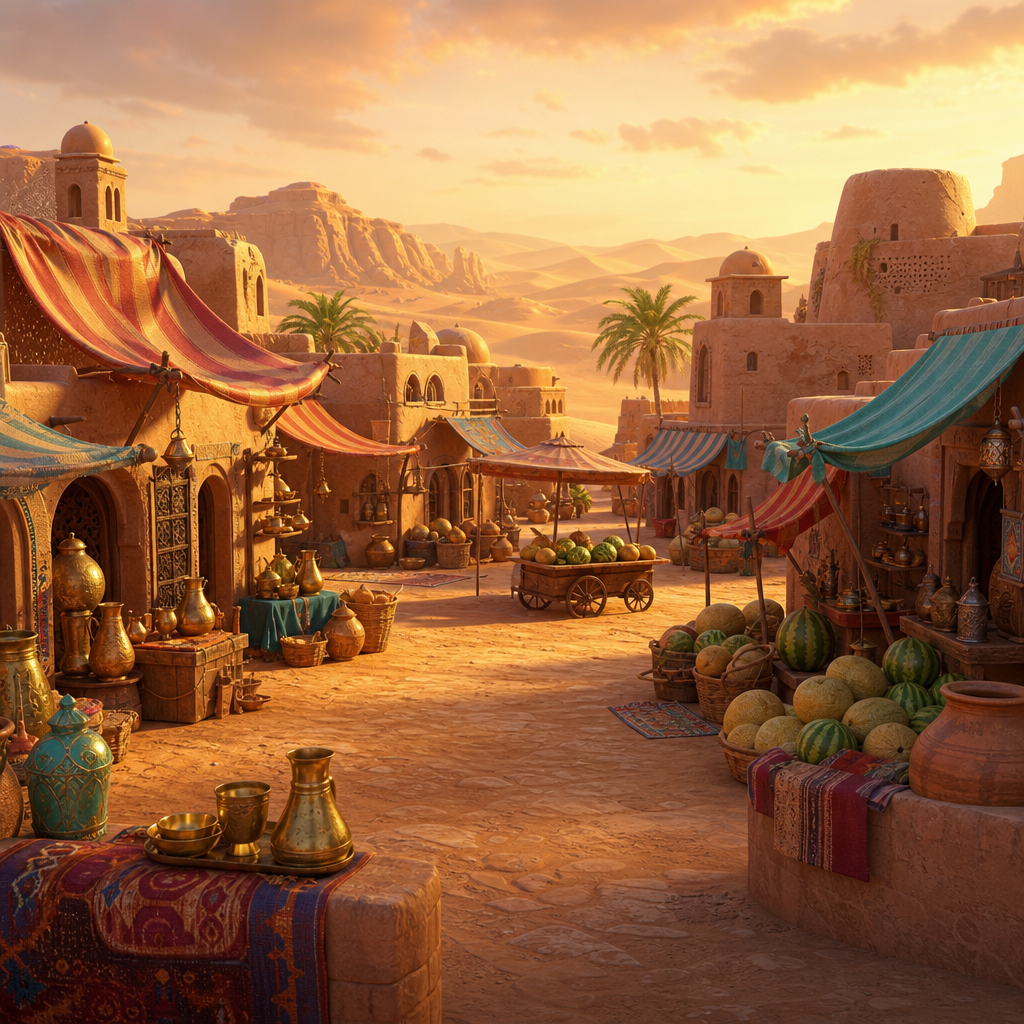
Saffron Dune Market runs along the base of a sandstone wall at the edge of the desert, where the dunes begin to flatten and the first clay-brick buildings lean against each other for shade. Striped canvas awnings — yellow, rust, cream — flap at the corners where they are pegged too loosely, and fine sand gathers in the seams and folds. The air smells of dust, bruised mint, cumin, and the sweetness of melon sliced open in the heat. Stalls are arranged without a plan, so brass cup sellers give way to rope coilers give way to a shaded nook where cloth hangs drying in long indigo sheets that bleed at the edges. In the middle of the market a clay water jar stands under a canopy, its sides sweating in the afternoon. The sand underfoot is crossed with tracks — sandal marks, hoof prints, bird feet — and the shadows move slowly westward as the day tips. At the far end, a low archway opens onto the open dune, where the wind has shaped the sand into a long smooth ridge that is different every morning.
7
Stories
5
Cast
Who you'll meet here
See all 5 characters →
Laila
Laila is a quiet spice-keeper who sits as tall as a clay jug and watches the market from a shaded doorway. She cares fiercely about the little routines that help the market feel calm and welcoming, but she can be slow to share what she knows.

Mira
Mira is a medium-sized sand singer who stands as tall as a market crate and travels from stall to stall with the breeze in her hair. She loves turning little moments into songs, but she gets so caught up in the feeling of a tune that she forgets to notice who is listening.
Nia
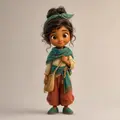
Nia is a careful little market helper who fits in a child's palm and notices everything before she speaks. She likes to make sure everyone feels included, but she worries when people seem disappointed in her.
Omar
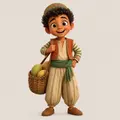
Omar is a cheerful melon-cart child who stands about as tall as a stool and loves to talk to everyone who passes by. He often turns tense moments into friendly chatter, but he hates being the one who gets things wrong.

Zahir
Zahir is a lanky brass fixer who stands as tall as a doorway and can be spotted by the little sparks of metal dust on his sleeves. He loves the lively clatter of the market and can’t resist a puzzle, but his sharp mouth and quick impatience often make him harder to approach than he means to be.
7 stories from this world
See all 7 stories →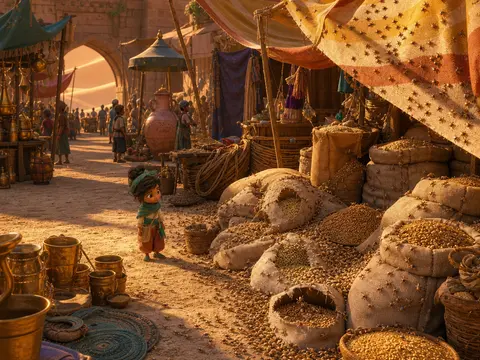
Beetles in the Grain Stalls
A sand beetle swarm pours into the grain stalls, not to bite anyone but to feast on stored seed and flour. The market must act fast to protect the food before the beetles hollow out the day’s trade, because every bag they reach makes the shortage worse.
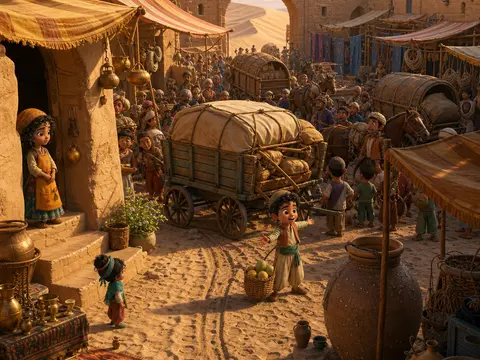
The Caravan at the Wrong Gate
A rival caravan arrives late with urgent trade goods, but a mix-up at the market gate sends their wagons into the wrong selling lanes. Now the stalls are blocked, the cargo is in the wrong hands, and both sides have to sort out the confusion quickly before tempers rise and valuable goods are lost or damaged.
Birds at the Spice Stalls
Just as the spice sellers begin opening their jars, a flock of thirsty desert birds lands in the market and starts pecking at bright dried herbs, fruit slices, and loose grains. People have to guide the birds away without hurting them, because the birds are scattered across every stall and the damage grows with each minute they stay.
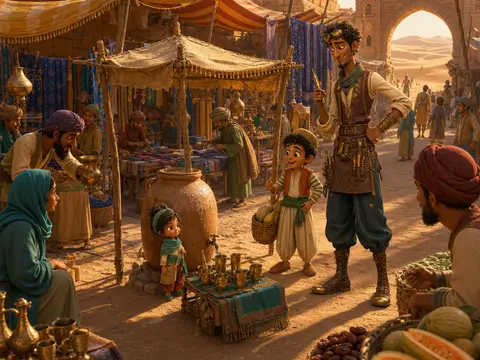
The Missing Caravan
A caravan expected to bring water, dates, and fabric does not arrive on time, and the market’s most important trading day is suddenly at risk. People have to choose how to stretch what little they have, who gets priority, and whether to send someone out to look for the missing caravan.
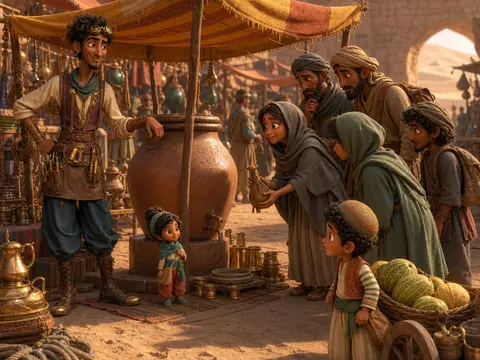
Not Enough Water
A group of thirsty travelers arrives with only a tiny skin of water and a promise to pay later, but the market’s well is not keeping up with demand. Sellers must decide whether to share scarce water, bargain carefully, or set aside their plans so the travelers do not faint before help can be found.
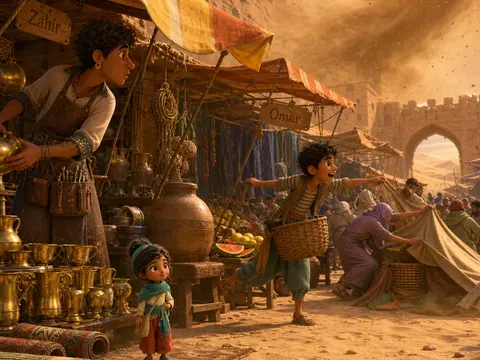
Sandstorm at Market Hour
At the busiest hour of the market, a sandstorm rolls in earlier than expected and starts filling the open stalls with grit, so the sellers must decide which goods to cover, which customers to move, and which fragile things can be saved before the storm ruins them. The whole market has to work together fast because every minute makes the loss bigger.